
NASA Artemis II Crew Rings Nasdaq Closing Bell
Nasdaq Chair and Chief Executive Officer Adena T. Friedman, left, and NASA’s Artemis II crewmembers CSA (Canadian Space Agency) astronaut Jeremy Hansen, and NASA astronauts Christina Koch, Victor Glover, and Reid Wiseman, right, ring the closing bell of the Nasdaq market session, Thursday, April 30, 2026. NASA’s Artemis II mission took Wiseman, Glover, Koch, and […]
Complete Article Summary
Nasdaq Chair and Chief Executive Officer Adena T. Friedman, left, and NASA’s Artemis II crewmembers CSA (Canadian Space Agency) astronaut Jeremy Hansen, and NASA astronauts Christina Koch, Victor Glover, and Reid Wiseman, right, ring the closing bell of the Nasdaq market session, Thursday, April 30, 2026. NASA’s Artemis II mission took Wiseman, Glover, Koch, and […]
This development highlights the dynamic and rapidly evolving nature of the space industry, where technological breakthroughs and scientific discoveries continue to push the boundaries of what's possible. The increasing pace of innovation reflects growing investment, international collaboration, and the maturation of commercial space capabilities.
Space technology development often yields unexpected benefits for terrestrial applications, from advanced materials and manufacturing techniques to medical innovations and environmental monitoring tools. The cross-pollination between space research and other scientific fields accelerates progress across multiple disciplines.
These advancements contribute to our collective knowledge and inspire future generations of scientists, engineers, and explorers. As space becomes more accessible and our capabilities expand, humanity stands on the threshold of becoming a truly spacefaring civilization.
Related Articles
Solar radio bursts reveal hidden magnetic switchbacks near the sun, Parker Solar Probe data suggest
Solar radio bursts are intrinsically linked to the motion of their emitting source through the coronal and heliospheric plasma. Electron transport is mostly confined to magnetic field lines. These electrons move at a substantial fraction of the speed of light and often generate radio emission via the plasma emission process.
Canada proposes POET mission to hunt Earth-sized planets
Exoplanet science and the search for life beyond Earth continue to advance at break-neck speeds, with the number of confirmed exoplanets by NASA rapidly approaching 6,300, with 223 of those exoplanets being designated as terrestrial (rocky) exoplanets. With the promise of discovering an increasing number of Earth-sized exoplanets increasing every day, new telescopes from across the world have the opportunity to contribute to this incredible field.
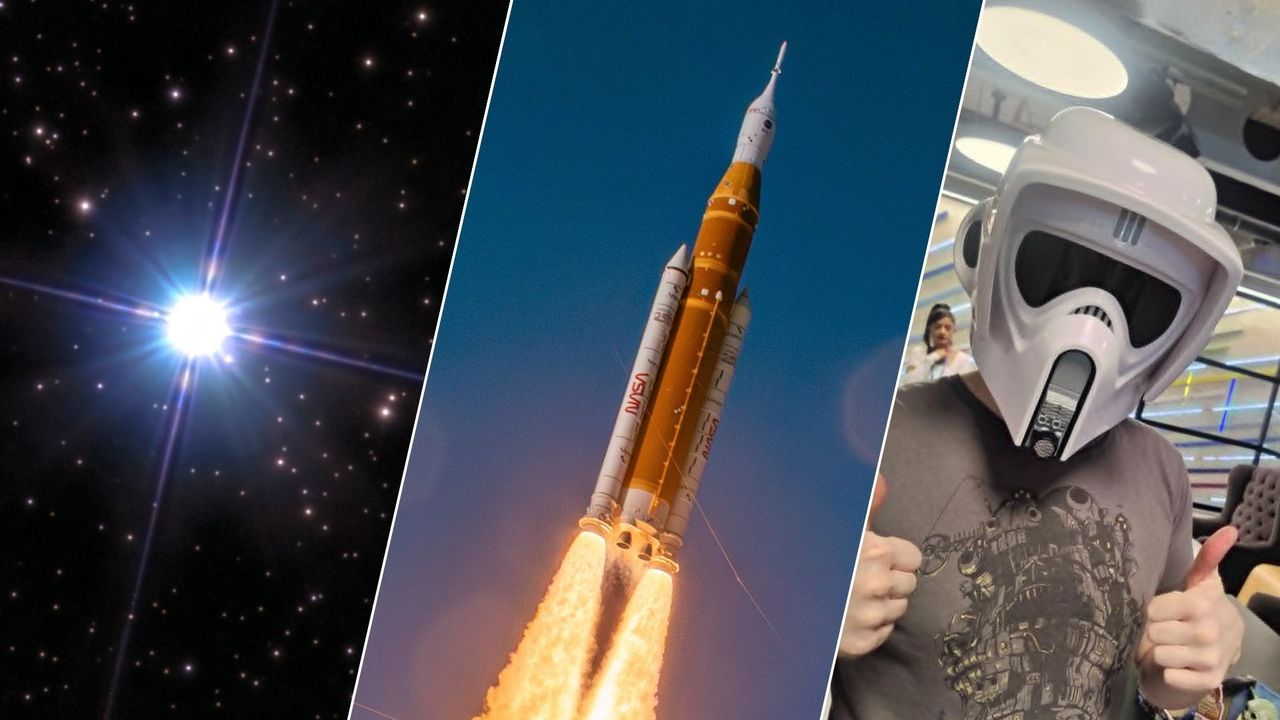
Galaxies, Artemis 2, space telescopes and stormtroopers: Here are the best photos from our staff
Photos from around the space team.
More Space News
Related articles will be displayed here based on category and content similarity.